Original paper | Praca oryginalna
Psychosomatic experiences during wound debridement using Lucilia sericata larvae: A research report
Address for correspondence
Anna Malisiewicz, University of Rzeszow, Faculty of Health Sciences and Psychology, Collegium Medicum UR, Institute of Nursing, Poland, e-mail: annamalisiewicz1@gmail.com
Received: 30.04.2026; Accepted: 6.07.2026
LECZENIE RAN 2026; 23 (2): 59-65
DOI: https://doi.org/10.60075/Ir.v2312.160

Spis treści / Table of Contents
Abstract
Introduction: Over the past two decades, the approach to wound care has evolved, primarily due to a better understanding of the scientific foundations of wound care and the implementation of innovative methods that accelerate the healing process. The elimination of devitalised tissue through effective debridement results in the eradication of biofilms, a reduction in the inflammatory phase, and the creation of conditions that are conducive to the formation of granulation tissue. A promising approach to wound debridement involves the utilisation of green bottle fly larvae. Larval wound therapy (LWT) has demonstrated significant potential for wound debridement, particularly in cases of difficult-to-heal wounds or bacterial resistance to antibiotics.
Aim of the study: is to determine the prevalence of adverse psychophysical symptoms during larval wound therapy.
Material and methods: The present study was conducted among patients with chronic wounds associated with angiopathy (ulcers) and pressure (pressure ulcers), who were eligible for LWT. The participants provided informed consent to participate in the study. The researchers employed observation and assessment as the primary research methods. The research tool employed was a scientific research protocol, which comprised three sections. The collected data were then subjected to statistical analysis using IBM SPSS v.21 software.
Results: A total of 281 subjects participated in the study, comprising 43.1% women and 56.9% men, with ages ranging from 28 to 100 years. The mean age of the subjects was 70.18 ±13.21 years. A clinical assessment of the patients revealed the presence of chronic wounds, including pressure ulcers (20.3%), mixed ulcers (25.6%), venous ulcers (29.27%), arterial ulcers (9.3%), and ulcers associated with diabetic foot disease (15.7%). In 49.8% of patients, no concerning symptoms were observed during larval therapy. The most prevalent symptoms reported by patients (34.5%) included increased pain during therapy, itching (13.2%), skin damage around the wound (3.9%), bleeding (3.9%), and fever (2.1%).
Conclusions: Larval wound therapy is a safe therapeutic procedure aimed at debriding and revitalising wound tissues. The most frequently reported adverse symptoms during therapy were increased pain and skin sensations such as itching. The investigation revealed that variables such as age, place of residence, and wound area were not found to influence the occurrence of problems associated with larval therapy.
Key words: wound, Lucilia sericata, larval wound therapy.
Introduction
An aging population, rising hospital-acquired infections, and bacterial resistance to antibiotics present numerous challenges to modern medicine in the treatment of hard-to-heal wounds. Traditional treatment methods are insufficient for new challenges associated with unfavourable epidemiological trends, such as diabetes, obesity, and cardiovascular diseases. These trends contribute to an increased number of patients with hard-to-heal wounds.
According to the Polish Wound Treatment Society’s (PTLR) guidelines for managing hard-to-heal wounds, implementing a strategy for the early prevention of biofilm formation based on wound hygiene and TIMERS is crucial [1]. These concepts also emphasize debriding wounds promptly to reduce bacterial loads and stimulate the formation of physiological granulation tissue [2]. Alongside sharp and surgical debridement, larval wound therapy (LWT) is a safe and effective technique for removing necrotic tissue, supported by extensive scientific evidence.
Larval wound therapy is not only effective at removing necrotic tissue, but the defensin proteins produced by the larvae also exhibit anti-inflammatory, anti-biofilm, and bactericidal effects, as well as the ability to stimulate reparative processes [3, 4].
It should be noted that the duration of therapy depends on several factors, primarily the patient’s tolerance of the unpleasant sensations associated with the presence of larvae in the wound. Despite pharmacological preparation, patients may experience negative sensations such as a foreign body sensation, itching, and pain during therapy. These sensations may lead to the shortening of therapy to avoid discouraging patients from continuing the treatment method.
This study aimed to determine the prevalence of adverse psychophysical symptoms during larval therapy.
Material and methods
A prospective evaluation of the wound debridement process and concerning symptom occurrence was conducted during a 72-hour observation period while debridement was performed using Lucilia sericata maggots. The study used a research protocol to assess the wound, pain severity, sensation perception during debridement, and debrided tissue area.
The study was conducted at the Wound Care Clinic of the Podkarpackie Oncology Centre Specialist Hospital in Brzozow. The evaluation covered a period of five years and four months (from 2 January 2020 to 30 April 2025). It took place from 2 January 2020 to 30 April 2025, lasting a total of 5 years and 4 months. During this time, clinic staff provided care to 2098 patients, totalling 16,058 consultations, including physician and nursing visits. The average age of the participants was 70.91 ±15.39 years. The youngest patient was 3 years old, and the oldest was 101 years old. Women accounted for 51.3% (n=1,076), while men accounted for 48.7% (n=1,022). The largest age group was individuals aged 70-79 years, accounting for 35.2% of patients. Of the individuals eligible for larval therapy (n=468), 281 met the recruitment criteria (i.e. they had vascular and pressure-related wounds in the pelvic region and lower extremities). These criteria were defined during the study preparation phase and included voluntary consent to participate in the study. Eligible individuals had chronic wounds of vascular aetiology or pressure ulcers (full-thickness skin damage – NPIAP Grade 3 or deep-tissue – NPIAP Grade 4), wounds resulting from diabetic foot disease (WIFi Grade 1 or higher), and a pain level below 4 on the VAS/NRS scale at the time of examination. If a patient had more than one wound, only the wound requiring TLR was included in the study.
The guidelines set forth in the Helsinki Declaration [5] were followed during the study. Larvae were obtained from the certified biological breeding facility Biolab Polska in quantities ranging from 50 to 100.
The collected data were analysed using IBM SPSS v.21. The following measures and analytical techniques were used to analyse the distributions: median, arithmetic mean, and standard deviation. Non-parametric tests were applied, including the x² test, Mann-Whitney U test, and Kolmogorov-Smirnov test. For quantitative variables, relationships were examined using the Spearman’s rho correlation coefficient. The significance level was set at α=0.05.
Bioethical standards
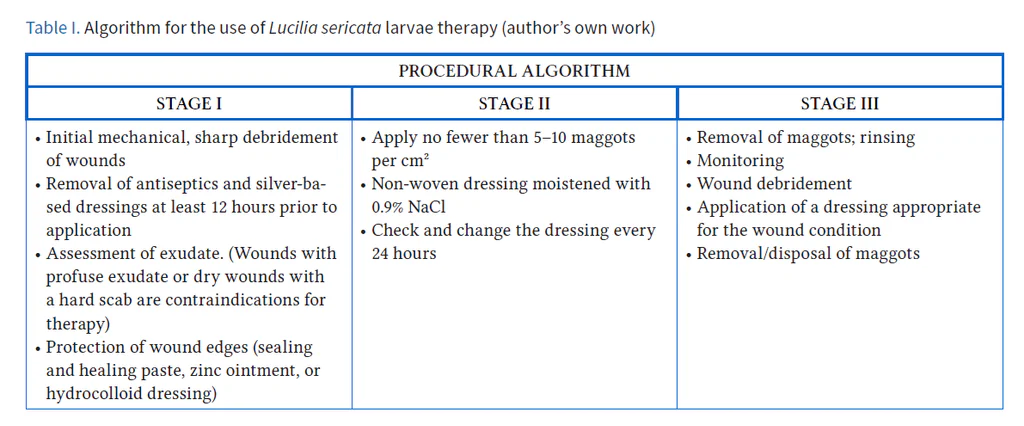
Approval to conduct the research was obtained from the Bioethics Committee at the University of Rzeszów (resolution no. 2025/04/34/W/A, dated 2 April 2025; amending resolution no. 30/6/2017, dated 8 June 2017). Approval to conduct the study was also obtained from the administration of the Rev. B. Markiewicz Specialist Hospital and the Podkarpackie Oncology Centre in Brzozow. Study participants were informed about the study’s purpose, indications, potential complications, and exact course. Before beginning maggot therapy, each patient received information about the therapy and basic education on the stages of wound debridement using maggots (Table I). Nurses competent in maggot therapy provided comprehensive patient supervision and guidance based on their clinical experience, either in person or via WhatsApp® or Messenger®. Larval application was conducted in accordance with the protocol proposed by Szewczyk et al., as well as the Polish Wound Treatment Society’s Position Statement on larval wound therapy [6, 7].
Test characteristics
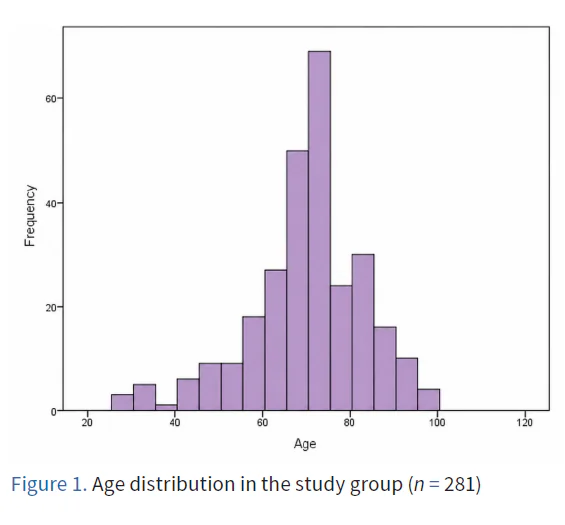
The study group consisted of 43.1% women (n=121) and 56.9% men (n=160). Participants were divided into four age groups. The mean age of the participants was 70.18 ±13.21 years, and the youngest participant was 28 years old. The largest group consisted of participants over 65 but under 74 years of age (39.5%) (Fig. 1).
Rural residents constituted a significantly larger group (n=201, 71.5%). The study assessed patients’ self-care levels using the Barthel Index. The mean self-care score was 67.44 ±27.30. Self-care abilities were classified as limited (21-85 points on the Barthel scale, 67.6%) or satisfactory (86-100 points on the Barthel scale, 23.1%).
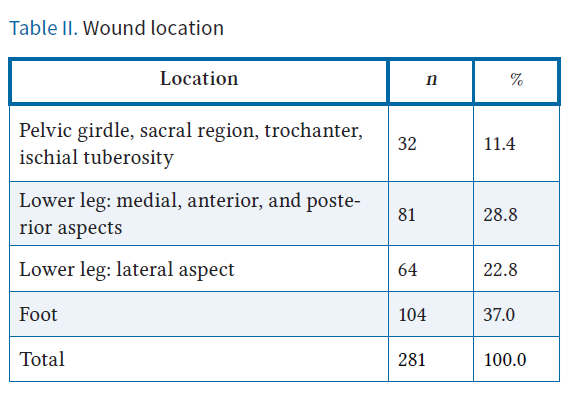
The time since the onset of the wound in patients in the study group ranged from 1 to 38 months. Wound locations varied and included the pelvic girdle, sacral region, trochanter, and ischial tuberosity (11.4%). The largest proportion of wounds were in the shin region (n=145; 51.5%), particularly in the medial (14.3%), anterior (14.3%), and posterior (28.8%) regions, as well as the lateral part of the shin (22.8%) and the foot (37.0%) (Table II).
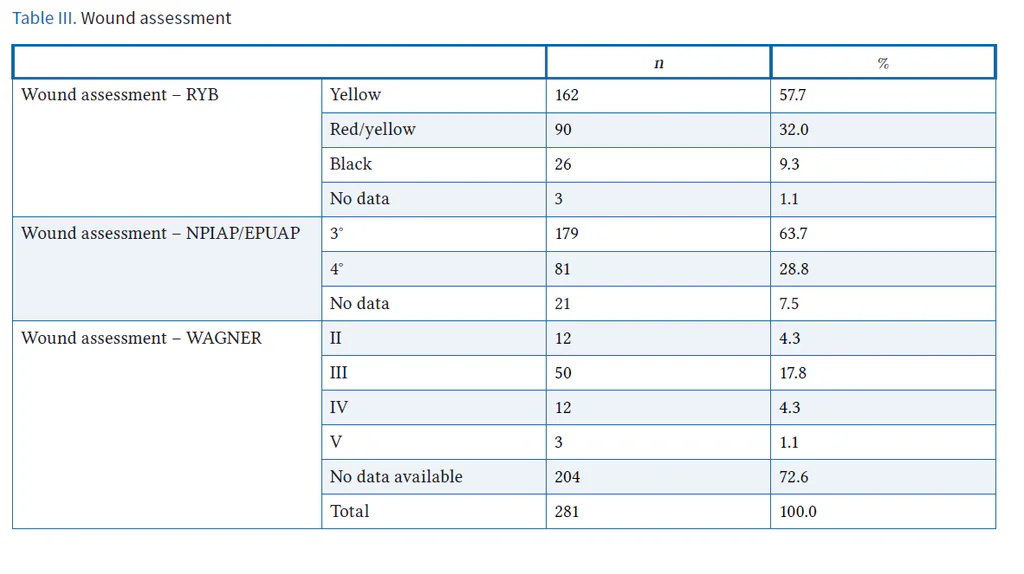
Based on the RYB wound colour classification (red, yellow, black), the wounds studied were assessed as follows: yellow 57.7%, red/yellow 32.0%, and black 10.7%. The depth of the lesions was based on the National Pressure Injury Advisory Panel (NPIAP) classification: Stage 3 – full-thickness skin loss (63.7%) and Stage 4 – lesions extending to tendons and muscles (36.3%). Skin and foot tissue damage associated with ulcers in the course of diabetic foot disease was classified according to the Wagner scale (II 4.3%, III 17.8%, IV 4.3%, V 1.1%) (Table III).
The area of damaged tissue varied widely, ranging from 8 cm² to 225 cm².
Assessment of selected variables
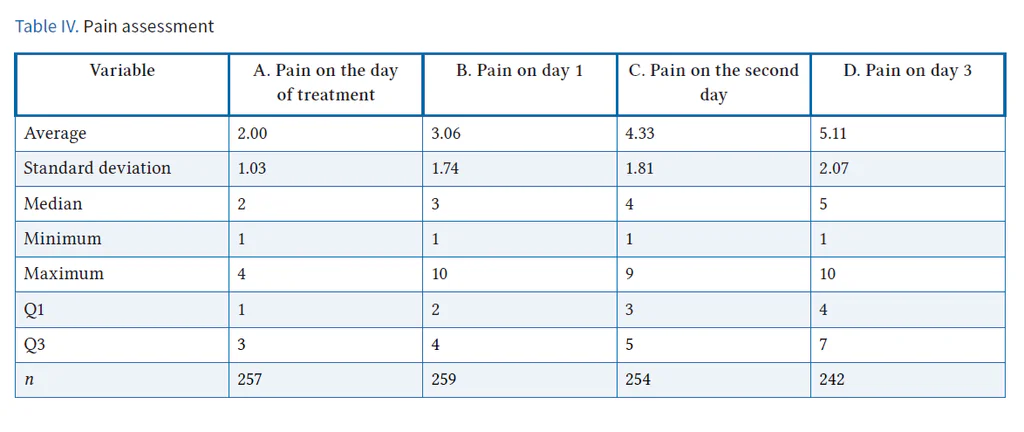
Pain intensity was assessed four times for each eligible patient. The first assessment was conducted when the patch was applied, and subsequent assessments were conducted every 24 hours on days 1, 2, and 3 of therapy. The study demonstrated that mean pain scores increased significantly on the third day of therapy (5.11 ±2.07), compared to the day of application (2.00 ±1.03), when pain sensations were mild (Table IV). Despite the use of analgesics classified as Step I or II on the World Health Organisation analgesic ladder, wound-related pain was reported by 28.4% of patients.
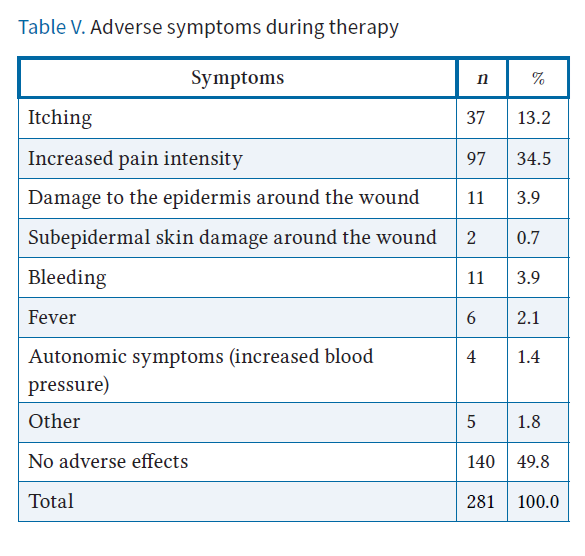
The most commonly reported adverse effect (34.5%) was an increase in pain intensity during therapy. Itching (13.2%), skin damage around the wound (3.9%), and bleeding (3.9%) were the next most common adverse effects. Fever occurred in 2.1% of patients. Conversely, 49.8% of patients undergoing larval therapy experienced no side effects (Table V).
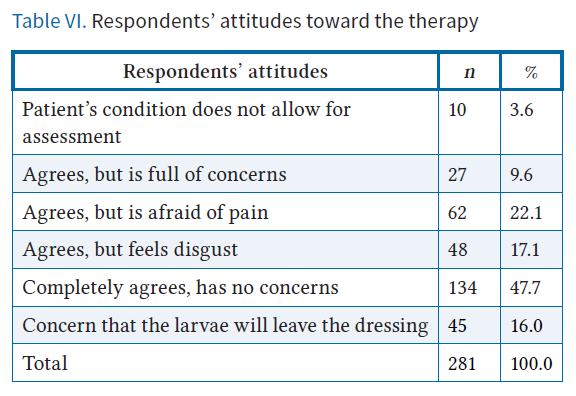
In the subjective assessment, nearly half of the surveyed patients (47.7%) reported no negative symptoms associated with TLR. Only a few patients (9.6%) agreed to undergo the therapy despite having numerous doubts and concerns. The remaining respondents were primarily concerned about pain (22.1%), feelings of disgust (17.1%), and anxiety about the dressing coming off (16.0%) (Table VI).
Discussion
Experts have identified the elimination of biofilms and a significant increase in antibiotic resistance as two predominant problems associated with wound healing. A meta-analysis by Malone et al. [8] confirmed the presence of biofilms in up to 78.2% of patients with chronic wounds. One of the many scientifically validated and documented functions of defensins secreted by Lucilia fly larvae is combating biofilm [4, 9]. A biofilm is an aggregated community of microorganisms surrounded by an extracellular matrix that acts as a barrier against adverse environmental conditions, antimicrobial agents, and the host’s immune system. The biofilm matrix composition is characterised by high adaptive variability, meaning it undergoes modifications depending on the microorganisms’ environment. The presence of biofilms in wounds prolongs the inflammatory phase and disrupts the healing process. The excretions and secretions of Lucilia fly larvae eliminate biofilms and eradicate microorganisms. This is of great importance in preparing the wound for the granulation phase, especially in the era of antibiotic resistance [10].
The initiation of TLR must be preceded by a well-thought-out, individually tailored preparatory process involving the patient and their family or legal guardian. The questionnaire developed by Bazaliński can be used to assess the patient’s acceptance of the TLR method. Often, the initial psychological reaction among patients is disgust, revulsion, and anxiety. In general, larvae are associated with decaying carrion and are considered repulsive. They are also associated with unconventional treatment methods [4]. Thus, a key objective of the study was to identify patients’ specific fears and attitudes toward TLR therapy. The study demonstrated that nearly half of the participants (47.7%) had no fears related to larval therapy. These results are consistent with earlier findings by Spilsbury et al., who reported that up to 80% of patients were satisfied with TLR therapy [11]. However, Morozov et al. observed negative emotions, such as fear and disgust, among their respondents at the thought of using maggots. Nevertheless, more than half of them stated that the thought of “worms” was repulsive and revolting [12]. In our analysed results, however, only 17.1% of respondents expressed similar feelings. A key step in preparing a patient for TLR therapy is explaining the purpose, benefits, and indications of the proposed treatment method to the patient and their family in an understandable way. Morozov et al. [12] point out that similar feelings and psychological barriers affect medical staff as well, which is consistent with the results of a study conducted by Miecznik in 2024 [13]. Pajarillo et al. [14] also extensively discussed the topic, noting that “disgust” was the main barrier to using TLR. In the same study, the authors emphasise that this problem primarily affects women. However, this finding is not confirmed by Miecznik, whose study showed a similar gender distribution across the entire group [13]. An analysis of the research by Courtenay et al. [15] reveals that nursing staff in the United Kingdom were reluctant to use biosurgery due to fears that the larvae would escape the dressing. Studies published by Sherman et al. confirm these same concerns among staff [16, 17].
Our research indicates that only 16% of respondents were anxious about the possibility of maggots escaping the dressing. One of our study’s priorities was explaining the entire process, building trust with patients, and providing comprehensive care for patients and their families at every level and stage of therapy. This may have directly impacted the results and reduced respondents’ fears and anxiety about therapy. Bazaliński et al. emphasised the immense importance of enhancing patient education and preparation for TLR in their studies [18]. The authors report that medical staff have difficulty conveying information to patients about the potential benefits of larval therapy. Meanwhile, a group of patients believes that the benefits far outweigh their initial reaction to the treatment [19, 20]. Additionally, Miecznik noted in her study that the ability to convince patients to undergo biodebridement was unrelated to respondents’ age, gender, years of experience, or place of work, a factor worth considering [13]. Several authors point out that the choice of larval application method is significant because it can affect the patient’s acceptance and attitude, depending on the selected method [3, 4, 6, 21]. Currently, two methods of larval application are used. The first method, which is more commonly used and less expensive, involves a shorter debridement time and is called the “loose larvae” method. When choosing this method, consider that improper skin protection may lead to epidermal irritation as the larvae move, as well as increased wound exudate during therapy. Proper protection of the wound margins using zinc or ostomy paste effectively reduces the risk of tissue damage [3]. The second method, known as the “biobag”, is simpler and less time-consuming. Patients should be informed that choosing this method results in higher treatment costs and a longer revitalisation period. It consists of a ready-to-use polyester dressing containing maggots; a fine mesh prevents the maggots from escaping the dressing and entering the wound [6]. Allowing patients to choose their preferred therapy can have positive effects, leading to better tolerance of LTR and reducing feelings of disgust, aversion, or fears related to maggots moving outside the wound.
Another important aspect of the study was determining the prevalence of the most common distressing symptoms reported by patients during therapy. The research data collected and analysed as part of our study allows us to address this issue. Sherman and Watts report that moderate pain may occur during TLR, affecting 4% to 40% of cases [22]. Our research produced results consistent with those of the aforementioned authors: 34.5% of patients experienced increased pain intensity, which was the most frequently reported complication in the study group. Mumcuoglu et al. conducted another study confirming the occurrence of pain during therapy among a large group of patients treated in 16 hospital wards in Israel [23].
In our studies, we also observed an increase in pain levels on certain days of treatment, with the highest level of pain occurring on the third day. An analysis of the results obtained by Mumcuoglu et al. [23], involving 435 patients in total, reveals consistency with our own findings. The researchers observed an increase in pain intensity during therapy in 38% of patients who received the “bulk” application of larvae. During each procedure, patients were asked to report any differences in pain levels before and during the biosurgery. In our studies, we used the VAS/NRS scale to assess pain intensity before and on each subsequent day of the protocol to obtain more reliable data. Our experience, as well as that of other researchers, indicates an increase in pain intensity during biological debridement [23, 24]. Nevertheless, each of the above studies took measures regarding pharmacological treatment, including the use of nonsteroidal anti-inflammatory drugs (NSAIDs), co-analgesics, or weak opioids. The inability to control pain may consequently lead to discontinuation of therapy. As our research shows, another concerning symptom reported by participants in the study group was itching (13.2%). A review of the literature revealed no in-depth studies addressing this topic. Only Bazaliński et al. [25], in a qualitative literature review covering the years 2002-2022, noted the possibility of alleviating itching through pharmacotherapy or eschar removal.
According to our research, damage to the surrounding epidermis (3.9%) was another health issue associated with TLR therapy. One possible cause may have been insufficient protection of the skin around the wound against the movement of larvae. Depending on the clinician’s preference, to prevent this, the use of a hydrocolloid, zinc paste, or ostomy paste should be considered, and the dressing should be changed as recommended [4]. A review of the literature shows that some authors report bleeding as a rare complication in biosurgery [25-27]. Our results are consistent with these findings, as only 3.8% of our study group reported bleeding from the wound.
Only a few studies on this topic are available in databases such as PubMed, Medline, and Termedia. These studies address issues related to the occurrence of concerning symptoms among patients who underwent biological wound debridement therapy using Lucilia sericata larvae.
Conclusions
Larval wound therapy is a safe procedure that cleanses and revitalises the tissues within a wound. The most commonly reported adverse symptoms during therapy were increased pain intensity and skin sensations, such as itching. It was not confirmed that variables such as age, place of residence, or wound size influenced the occurrence of problems associated with larval therapy. Further research is needed. Educating and raising awareness within the medical community are key to fostering a positive attitude, reducing reliance on medication, and alleviating fear regarding the use of this method to treat chronic wounds in patients.
Disclosures
The authors declare no conflict of interest.
This paper did not receive external funding.
Approval to conduct the research was obtained from the Bioethics Committee at the University of Rzeszow (resolution no. 2025/04/34/W/A, dated 2 April 2025; amending resolution no. 30/6/2017, dated 8 June 2017).
References
- Szewczyk MT, Kózka M, Cierzniakowska K, et al. Profilaktyka odleżyn Zalecenia Polskiego Towarzystwa Leczenia Ran. Część I. Leczenie Ran 2020; 17: 113-146. DOI: 10.5114/lr.2020.101506.
- Murphy C, Atkin L, Dissemond J, et al. Defying hard-to-heal wounds with an early antibiofilm intervention strategy: wound hygiene. J Wound Care 2019; 28: 818-822. DOI: 10.12968/jowc.2020.29.Sup3b.S1.
- Bazaliński D. Skuteczność terapii biologicznej z wykorzystaniem larw Lucilia sericata w leczeniu ran przewlekłych u chorych w opiece długoterminowej i paliatywnej. Uniwersytet Rzeszowski, Rzeszów 2019.
- Bazaliński D, Przybek-Mita J, Skórka M. Leczenie odleżyn. In: Bazaliński D, Kózka M (eds.). Odleżyny w praktyce klinicznej. Zapobieganie i leczenie. PZWL Wydawnictwo Lekarskie, Warszawa 2021: 95-133.
- The WMA Declaration of Helsinki – Ethical Principles for Medical Research Involving Human Subjects. Available online: https://www.wma.net/policies-post/wma-declaration-of-helsinki-ethical-principles-for-medical-researchinvolving-human-subject/ (accessed August 25, 2025).
- Szewczyk MT, Cwajda-Białasik J, Mościcka P, et al. Leczenie odleżyn zalecenia Polskiego Towarzystwa Leczenia Ran. Część II. Leczenie Ran 2020; 17: 162-165. DOI: 10.5114/lr.2020.103116.
- Mrozikiewicz-Rakowska B, Tusiński M, Lipiński P, et al. Statement of the Polish Wound Management Association on larval therapy in wound management. Leczenie Ran 2023; 20: 89-95. DOI: 10.60075/Ir.v2013.43.
- Malone M, Bjarnsholt T, McBain AJ, et al. The prevalence of biofilms in chronic wounds: a systematic review and meta-analysis of published data. J Wound Care 2017; 26: 20-25. DOI: 10.12968/jowc.2017.26.1.20.
- Tamura T, Cazander G, Rooijakkers SH, Trouw LA, Nibbering PH. Excretions/secretions from medicinal larvae (Lucilia sericata) inhibit complement activation by two mechanisms. Wound Repair Regen 2017; 25: 41-50. DOI: 10.1111/wrr.12504.
- Bartosiewicz M, Junka A. Zastosowanie opatrunków w leczeniu ran przewlekłych powikłanych infekcją wywołaną przez drobnoustroje w formie biofilmowej. Leczenie Ran 2017; 14: 141-145. DOI: 10.15374/LR2017030.
- Spilsbury K, Cullum N, Dumville J, O’Meara S, Petherick E, Thompson C. Exploring patient perceptions of larval therapy as a potential treatment for venous leg ulceration. Health Expect 2008; 11: 148-159. DOI: 10.1111/j.1369-7625.2008.00491.x.
- Morozov AM, Sherman RA. Survey of Patients of the Tver region of Russia regarding maggots and maggot therapy. Int Wound J 2019; 16: 401-405.
- Miecznik E. Problem braku gotowości personelu pielęgniarskiego do stosowania metod biologicznego oczyszczania ran za pomocą larw Lucilia sericata. Forum Leczenia Ran 2024; 5: 55-62. DOI: 10.15374/FLR2024011.
- Pajarillo C, Sherman RA, Sheridan R, Kazis LE. Health professionals’ perceptions of maggot debridement therapy. J Wound Care 2021; 30 (Sup9a): VIII-VIIXI. DOI: 10.12968/jowc.2021.30.Sup9a.VII.
- Courtenay M. The use of larval therapy in wound management in the UK. J Wound Care 1999; 8: 177-179. DOI: 10.12968/jowc.1999.8.4.25866.
- Sherman RA. Maggot versus conservative debridement therapy for the treatment of pressure ulcers. Wound Repair Regen 2002; 10: 208-214. DOI: 10.1046/j.1524-475x.2002.10403.x.
- Sherman RA, Shimoda KJ. Presurgical maggot debridement of soft tissue wounds is associated with decreased rates of postoperative infection. Clin Infect Dis 2004; 39: 1067-1070. DOI: 10.1086/423806.
- Bazaliński D, Przybek-Mita J, Ścisło L, Więch P. Perception and Readiness to Undertake Maggot Debridement Therapy with the Use of Lucilia sericata Larvae in the Group of Nurses. Int J Environ Res Public Health 2022; 19: 2895. DOI: 10.3390/ijerph19052895.
- Bazaliński D, Karnas M, Wołkowicz M, et al. Zastosowanie larw Lucilia Sericata w oczyszczaniu ran przewlekłych – opisy trzech przypadków. Leczenie Ran 2018; 15: 153-159. DOI: 10.15374/LR2018017.
- Bazaliński A, Sieńczak K, Kołodziej A, Nowak A, Bazaliński D. Acceptance of maggot wound therapy in a group of people with chronic wounds. Pielęg Chir Angiol 2024; 18: 64-70. DOI: 10.5114/2024.141478.
- Janeczko JM, Bryś KE. Larwoterapia w leczeniu ran. Forum Leczenia Ran 2023; 4: 73-77.
- Watts R. Evidence summary: Wound management: Larval therapy. Wound Practice Res 2016; 24: 180-182.
- Mumcuoglu KY, Davidson E, Avidan A, Gilead L. Pain related to maggot debridement therapy. J Wound Care 2012; 21: 400, 402, 404-405. DOI: 10.12968/jowc.2012.21.8.400.
- Nigam Y, Williams S, Humphreys I, Clifford R, Brown A. An exploration of public perceptions and attitudes towards maggot therapy. J Wound Care 2022; 31: 756-770. DOI: 10.12968/jowc.2022.31.9.756.
- Bazaliński D, Przybek-Mita J, Pytlak K, et al. Larval Wound Therapy: Possibilities and Potential Limitations – A Literature Review. J Clin Med 2023; 12: 6862. DOI: 10.3390/jcm12216862.
- Steenvoorde P, van Doorn LP. Maggot Debridement Therapy: Serious bleeding can occur: Report of a case. J Wound Ostomy Continence Nurs 2008; 35: 412-414. DOI: 10.1097/01.WON.0000326662.32390.72.
- Bazaliński D, Przybek-Mita J, Lisowicz K, Skórka M, Więch P. Defensins of Lucilia sericata Larvae and Their Influence on Wound Repair Processes in Practical Assessment – A Study of Three Cases. Int J Environ Res Public Health 2023; 20: 5357. DOI: 10.3390/ijerph20075357.